
Every year organisations invest crores in training. Yet, transformation initiatives continue to fall short. It is a paradox that many business leaders know all too well.
The workshops were well attended. Learning hours were completed. Feedback scores looked encouraging. But six months later, customer experience hasn’t improved, sales behaviours remain unchanged, managers continue making the same decisions, and the promised business outcomes are nowhere in sight.
The question isn’t whether people were trained. The question is whether the organisation built the capability required to transform.
Training is like giving someone a map. Transformation requires them to complete the journey.
Imagine preparing for a trek in the Himalayas.
You can attend every briefing, study every trail map and watch countless videos about mountain climbing. But none of that guarantees you’ll reach the summit. Success depends on stamina, teamwork, decision-making under pressure, adapting to changing conditions and the discipline to keep moving when the path becomes difficult.
Business transformation is no different.
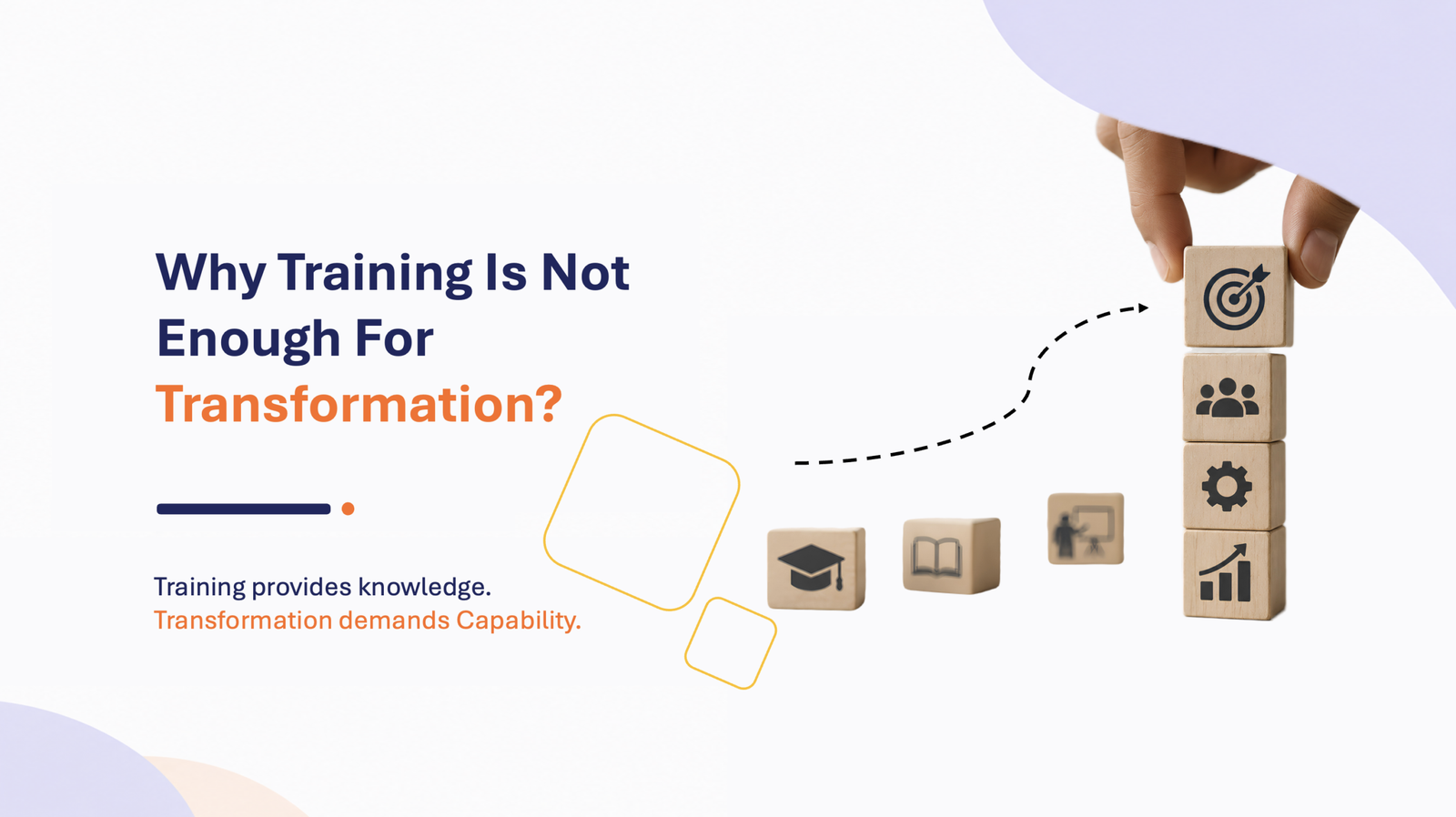
Training provides knowledge. Transformation demands capability.
Why do transformation programmes fail?
Most organisations treat learning as an event when transformation requires an ecosystem.
They focus on delivering courses rather than enabling new ways of thinking, deciding and acting. This often results in three common gaps:
Employees understand what needs to change but lack opportunities, support and reinforcement to practise new behaviours in their day-to-day work.
Generic programmes rarely connect learning to the organisation’s strategic priorities, operational realities or customer expectations. Without context, even well-designed content struggles to influence decisions.
Old habits are remarkably resilient. Unless leaders, systems, processes and performance measures consistently reinforce the desired behaviours, people naturally return to familiar ways of working.
Transformation rarely fails because people refuse to learn. It fails because organisations underestimate what it takes to help people change.
The Indian business context
Indian organisations are navigating one of the most significant periods of transformation in recent history.
Across sectors, from manufacturing and retail to BFSI, hospitality and mining, businesses are adopting digital technologies, redesigning customer experiences and responding to rapidly changing market expectations.
Yet many leaders continue to ask the same question:
“We’ve invested heavily in training. Why aren’t we seeing the business outcomes we expected?”
Industry studies consistently indicate that while organisations allocate substantial budgets to learning and development, converting learning into sustained workplace behaviour remains one of the biggest challenges. Many transformation programmes struggle because capability development isn’t integrated with leadership, processes, performance management and organisational culture.
The lesson is clear: training may be necessary. It is rarely sufficient.
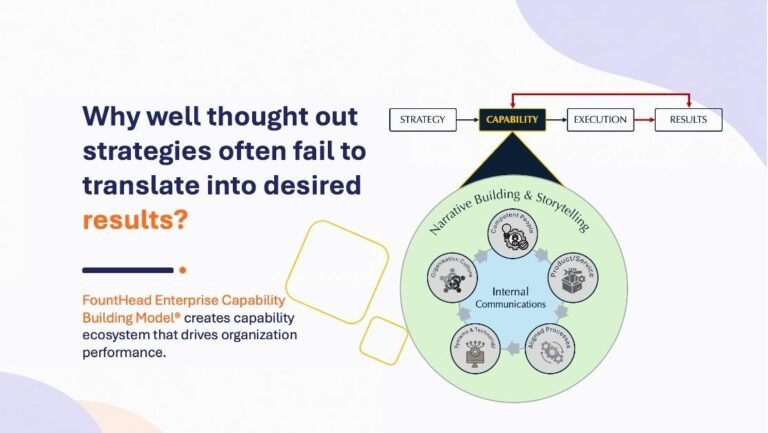
Capability is the bridge between strategy and execution
Think of transformation as building a bridge across a river.
- Strategy decides where the bridge should lead.
- Training delivers the construction materials.
- Capability is the engineering that ensures the bridge can actually carry people across.
Without capability, organisations are left with excellent materials but no functioning bridge.
Capability combines:
- Business context
- Technical knowledge
- Decision-making
- Behavioural change
- Leadership alignment
- Reinforcement
- Measurement
- Continuous improvement
It is this combination, and not training alone, that enables transformation.
What organisations should do differently
Instead of asking, “What training do our people need?” start asking:
- What business outcome are we trying to achieve?
- Which capabilities will make that outcome possible?
- Which behaviours must change?
- What barriers prevent those behaviours today?
- How will leaders reinforce the change?
- How will we measure progress beyond learning completion?
These questions shift the conversation from delivering programmes to enabling performance.
Transformation begins long before the classroom
Successful organisations recognise that learning is only one part of a much larger capability-building journey.
Transformation succeeds when employees understand not only what they must do differently, but also why it matters, how it connects to the organisation’s priorities and what support they will receive as they adopt new behaviours.
People rarely change because they attended a workshop. They change when new ways of working become the easiest, most meaningful and most consistently reinforced way to succeed.
The FountHead perspective
At FountHead, we believe organisations don’t transform because they train more. They transform because they build the capabilities that allow strategy to become everyday action.
That means beginning with business priorities and not just the learning calendars. It means designing interventions around measurable business outcomes and not just planning training hours. And it means recognising that lasting transformation happens when context, capability and culture move in the same direction.
Because the real challenge to achieve transformation is achieving capability!
What has been your biggest challenge in turning training into measurable business outcomes? We’d love to hear your perspective.
Turning training into measurable business outcomes?
That is the problem we solve. Let's talk about the capability your strategy actually needs.
Book a Discovery Call